













Nevis Multiform Foundation vs Traditional Trust: Which Structure Fits Your Family Office?


Introduction: The Evolving Landscape of Family Office Asset Protection
From all the structures dedicated to protecting one's assets, the trust has been consistently the favorite tool. However, on the island of Nevis, there are other options just as protective, like the Nevis multiform foundation.
Let's find out what you know and what you don't know about this hybrid structure that focuses on protection while providing flexibility.
Why Legal Structure Matters for Modern Family Offices
Today, basing an asset protection structure on solid legal grounds and transparent governance is more important than ever. This is why a good family office approach will concentrate on those jurisdictions that assure the best possible conditions.
For establishing the headquarters of a company, many choose Panama because of its free zones that encourage and benefit specific activities. For citizenship, many choose a flexible program like Sao Tome and Principe’s, while for residency, Panama is the best alternative again.
When it comes to protecting assets, experts choose Nevis, especially for the high level of protection supported by its International Exempt Trust Ordinance from 1994, better known as NIETO. When it comes to legislation, the Nevis Multiform Foundation is just as protective, providing the perk of flexibility.
The Rise of Nevis as a Leading Jurisdiction for Wealth Preservation
Since the Nieto law was established in 1994, the island of Nevis has been consolidated as one of the best jurisdictions for safekeeping real estate, cash, companies, valuables, and so on. For years, it has helped wealthy individuals protect their inheritance and ensure a future for their loved ones, thus creating a perpetual structure that will serve the generations to come.
Understanding the Nevis Multiform Foundation
Legal Origins and Core Features of the Nevis Foundation
The foundation is based on the Multiform foundation ordinance from 2004, which provides the legal background for this hybrid to exist. Its main characteristic is that it can shift from one structure to another according to the current needs, adopting the form of a trust, a company, a foundation, or a partnership.
Flexibility in Governance: Combining Trust, Company, and Foundation Elements
As we have written in other articles, a trust is a very fixed structure, which once established, forces the settlor to relinquish control of the assets. Nevertheless, a person may have different needs as years pass by, and this is exactly when a multiform foundation becomes useful.
What initially started as a trust to protect the estate may need more flexibility in the future. By changing it to a corporation, transactions and investments become easier.
It also works the other way around: a multiform structure can start as a company because the owner needs to conduct activities and generate profit. In the future, this can be turned into a trust so all the income is protected accordingly.
Advantages of a Multiform Foundation
- Higher flexibility
- A higher possibility of control
- Possibility of adapting the structure to the future needs of the beneficiaries
- It can exist without assets
- More advantages when it comes to using the assets for certain purposes
- Beneficiaries don't have to be that specific
- It can take on the shape of a partnership, a company, or a trust
- No recognition of foreign court rulings
- Established under a highly protective law (Multiform Foundations Ordinance from 2004)
- Located in a territorial taxation environment
- High level of protection against creditors
Asset Protection Strengths: Creditor-Proofing and Statutory Safeguards
In this regard, the foundation works exactly as a trust. Very firm statutory safeguards make both very reliable. Firstly, foreign rulings are not considered in Nevis, i.e., all claims must be done through the local legal system. Furthermore, this system stipulates a $100,000-dollar bond to start the claim.
Traditional Trusts: Time-Tested but Not Without Limitations
Key Characteristics of Common Law Trusts
Trusts are based on common law and on the concept of separated ownership. In essence, the settlor relinquishes control of his or her assets for the benefit of a third party, who are the beneficiaries.
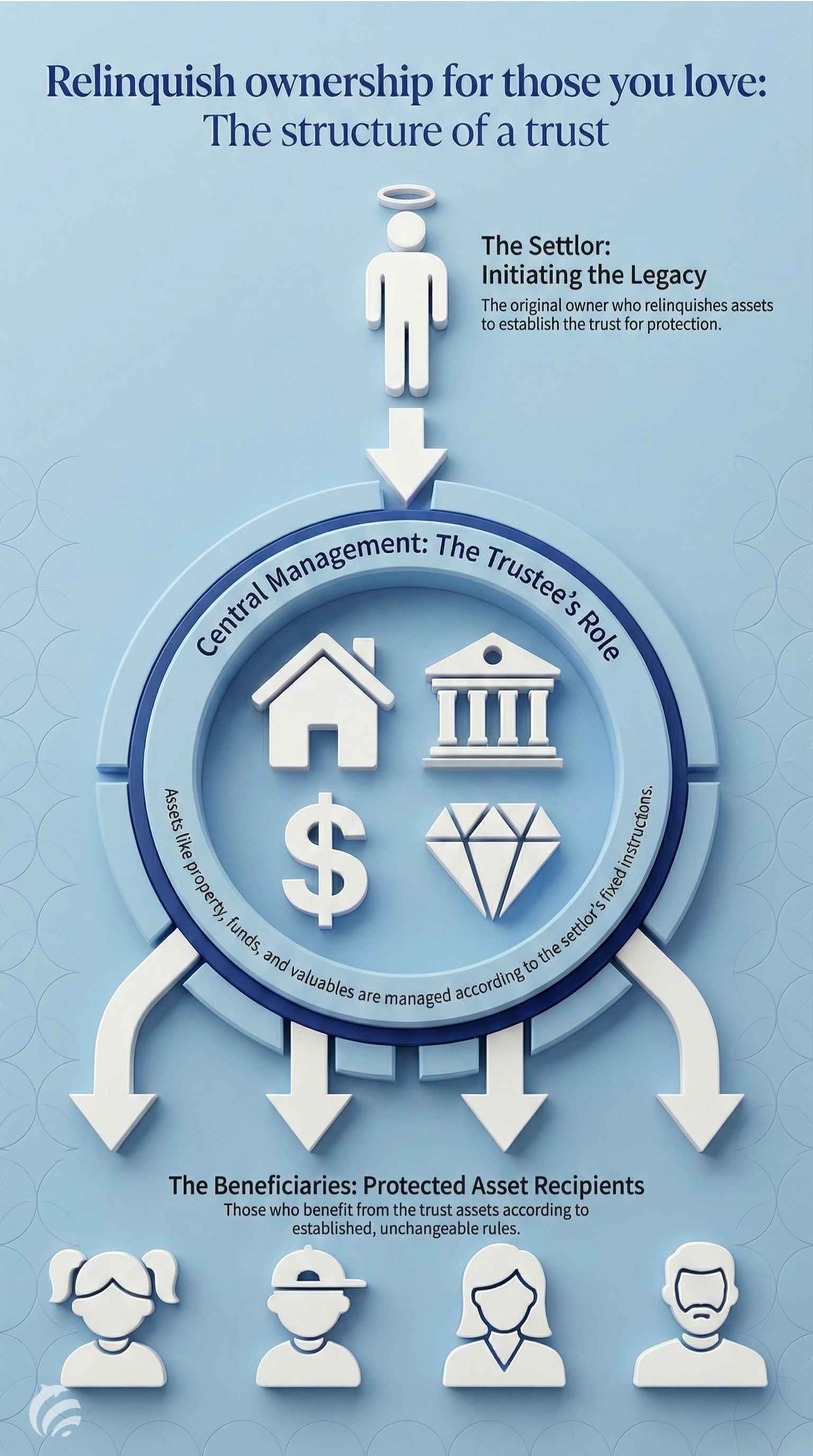
All in all, it consists of an agreement between the settlor and the trustee which will administer the assets as stipulated in the trust deed, in other words, as stipulated by the settlor. Simply speaking, nobody can take away what doesn't belong to you, yet those dividends, real estate, jewels, or cash will be distributed among those whom you choose.
For this, there are various alternatives that go beyond Nevis.
Delaware, for example, is well known for having highly protective legislation and several tax benefits. Here, trusts are exempt from state taxes if the beneficiaries are non-residents. Outside the US, there are jurisdictions like the Cook Islands that don't recognize foreign rulings and where trusts can be intervened only within the first two years after establishment.
Disclaimer: the information shared in this article is for general information purposes only and might be incorrect or outdated at the time of reading. Hence, this article doesn’t constitute legal advice.
Fiduciary Duties, Beneficiary Rights, and Court Oversight
The best of all is that the beneficiaries will benefit from the trust with the timings and amounts stipulated in the deed. However, this doesn't mean that they should keep a passive attitude. They have rights to demand accounting details and information regarding administration. The trustee, on its side, has the obligation to stick to the settlor’s instructions to the letter.
Vulnerabilities in High-Risk or Litigation-Prone Environments
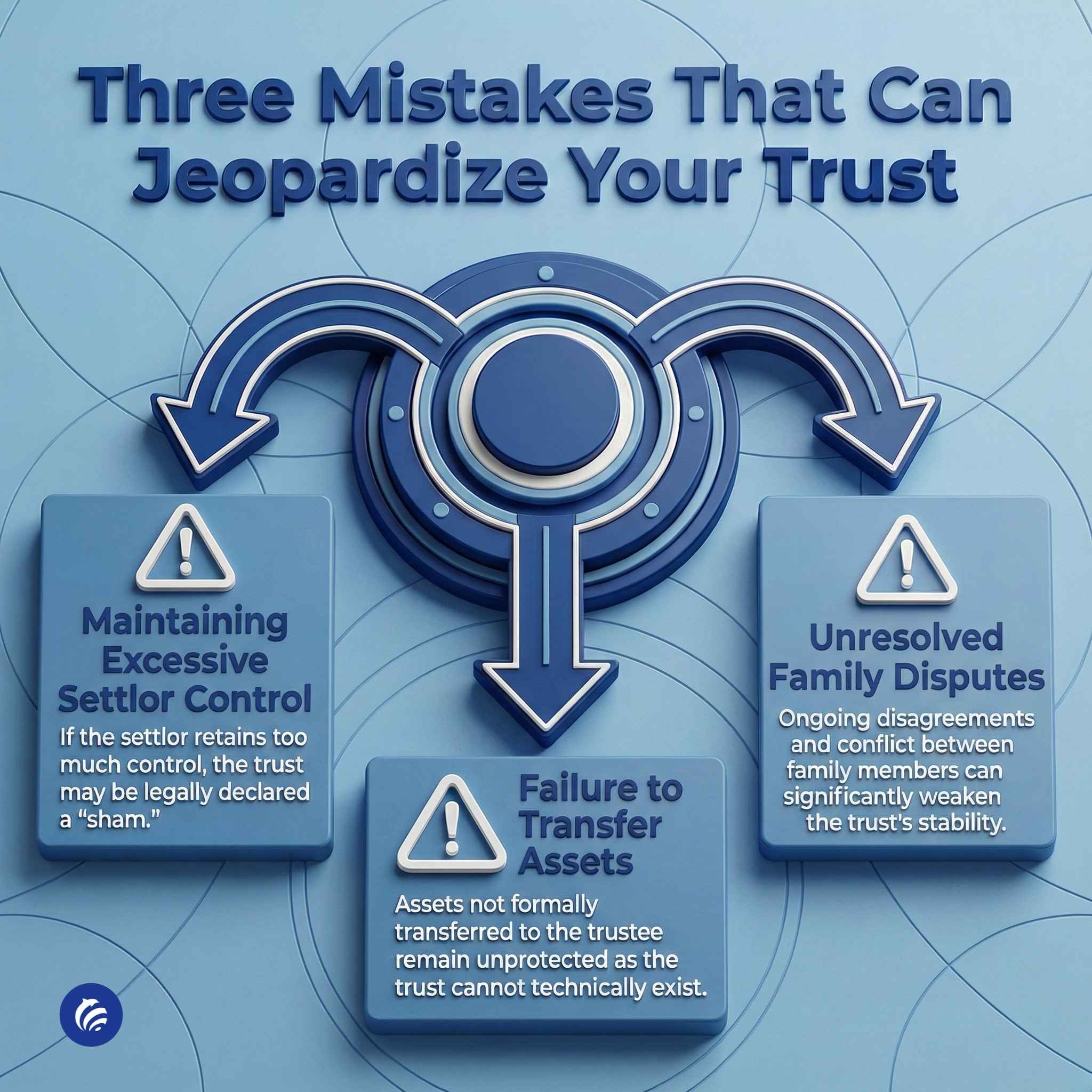
The trust may become vulnerable if any of the parties don't fulfill their duties as stipulated, or if they don't stick to their roles. If a settlor maintains control of the assets, if the trustee fails to administer it correctly, or if there are disputes between the beneficiaries, the trust might be prone to litigation.
Comparative Analysis: Nevis Multiform Foundation vs. Traditional Trust
Control and Confidentiality: Who Really Holds the Reins?
When talking specifically about Nevis, the founder of a foundation has more control over the assets than a settlor with a trust, which requires full relinquishment.
Resilience Against Foreign Judgments and Creditor Claims
Both a foundation and its counterpart are exceptionally resilient against foreign court rulings, being non-applicable in the jurisdiction of Nevis. This forces a potential claimant to start the process on the island and under its conditions, which start with a 100,000-dollar bond.
Tax Neutrality and Reporting Considerations for Global Families
We call Nevis a neutral jurisdiction because of its territorial taxation system, which exempts foreign assets from taxation. Nevertheless, it's mandatory to keep records available in Nevis, and the settlor or beneficiaries may be taxable in other jurisdictions.
Multiform foundation vs trusts
Multiform | Trust | |
Jurisdiction | Nevis | Nevis |
Legal framework | Multiform Foundation Ordinance | NIETO |
| Control | Allows more control of the assets | Requires full relinquishment of control |
Best for | Using the assets for specific purposes | Asset protection |
Beneficiaries | Can be groups or wider scopes | Have to be clearly defined |
Contemplates foreign rulings | No | No |
Practical Scenarios: When to Choose Which Structure
Case Study 1: Ultra-High-Net-Worth Family Seeking Maximum Asset Shielding
We've consulted with our experts several times last year, and the answer is the following: for asset protection, there is nothing better than a trust.
For obvious reasons, an ultra-high net worth individual is more likely to be targeted. Moreover, they are more exposed, which means they may be more vulnerable to potential mistakes in the mid or long term.
Whether to protect themselves from ill-intended people or to protect the estate from future claimants, the above-mentioned structure is the right solution because it forces the original owner to sperate himself/herself from the property.
Case Study 2: Multi-Generational Philanthropy with Dynamic Beneficiary Needs
What if a wealthy individual is interested in charity activities or donations? What if he/she wants to protect assets with the possibility of using them? In this case, a foundation is more convenient because it allows a broader group of beneficiaries, and more flexibility when it comes to uses and control.
Implementation Considerations and Common Pitfalls
Choosing Qualified Nevis Counsel and Licensed Registered Agents
A qualified Nevis council and a licensed registered agent are mandatory in the jurisdiction of Nevis. Both must be duly licensed, fully compliant with KYC, and have experience in this sector. This is why we recommend you go to consultants with the right contacts and enough experience, like our team at Mundo.
Avoiding Sham Transactions and Ensuring Substance Over Form
While both are delicate structures, the trust is even more. To avoid the trust being considered a sham in the future, the settlor should never maintain (or even seem to have) any control over the assets.
Secondly, after drafting the deed, the assets must be transferred, otherwise the trust won’t exist, and the assets may be seized. The lack of a transfer may be used to prove an intention on the side of the settlor to circumvent payments or responsibilities.
Conclusion: Aligning Legal Architecture with Family Vision
The Future of Private Wealth Structures in an Era of Transparency
Even though transparency is increasing, it is still possible to protect one’s estate with a high level of confidentiality. Many jurisdictions don't add individuals' information to public records, thus granting a whole level of confidentiality and protection against prying eyes. This already reduces the scope of the persons who may have intentions to hurt the family.
All in all, in the second quarter of our century, dangers and instability are increasing, especially for the ultra-wealthy. Luckily these legal frameworks have stood firmly for decades and offer excellent solutions in 2026 as well.
Final Recommendation Framework Based on Risk Profile, Goals, and Jurisdictional Strategy
As a final recommendation, Mundo suggests firstly establishing the goals and assessing the risk profile. Depending on the amount of wealth and how you what you want to use it, you can choose between a multiform foundation or trust. Furthermore, you can go look into other environments, such as Delaware or the Cook Islands.
At Mundo, we specialize in trust formation as well as foundations and we can help you set up a structure according to your needs. Our three-layered packages, each with different prices, include a variety of services that go from the simple establishment to accounting, registered agent, and record keeping
For decades, the Mundo team and its experts have been helping wealthy individuals to open accounts, establish companies, buy real estate, and access the right tools to fulfill their personal and financial goals.
You are welcome to write to us anytime and consult about the service you're interested in. Book a consultation and start the process as soon as possible.


.png.small.WebP)


.webp.small.WebP)


$347,000
$309,100
$300,000
$250,000
$424,000
Many of our readers are concerned about the risk of buying property abroad. Any foreigner embarking ...
Panama enjoys a rare combination of factors that contribute to making it a real estate hub in the re...
When there's a new program in the CBI world, everyone talks about it. Comparisons are common between...
Today, we go back to analyzing the new African CBI program, which has been on the lips of experts an...
The migration world has been increasingly tied to finances since wealthy people started to choose sm...
The financial world is facing dramatic changes, and structures need to be ready to accompany clients...